

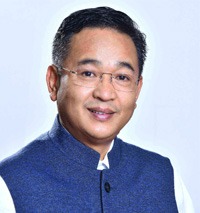
Hon'ble Chief Minister
Shri Prem Singh Tamang
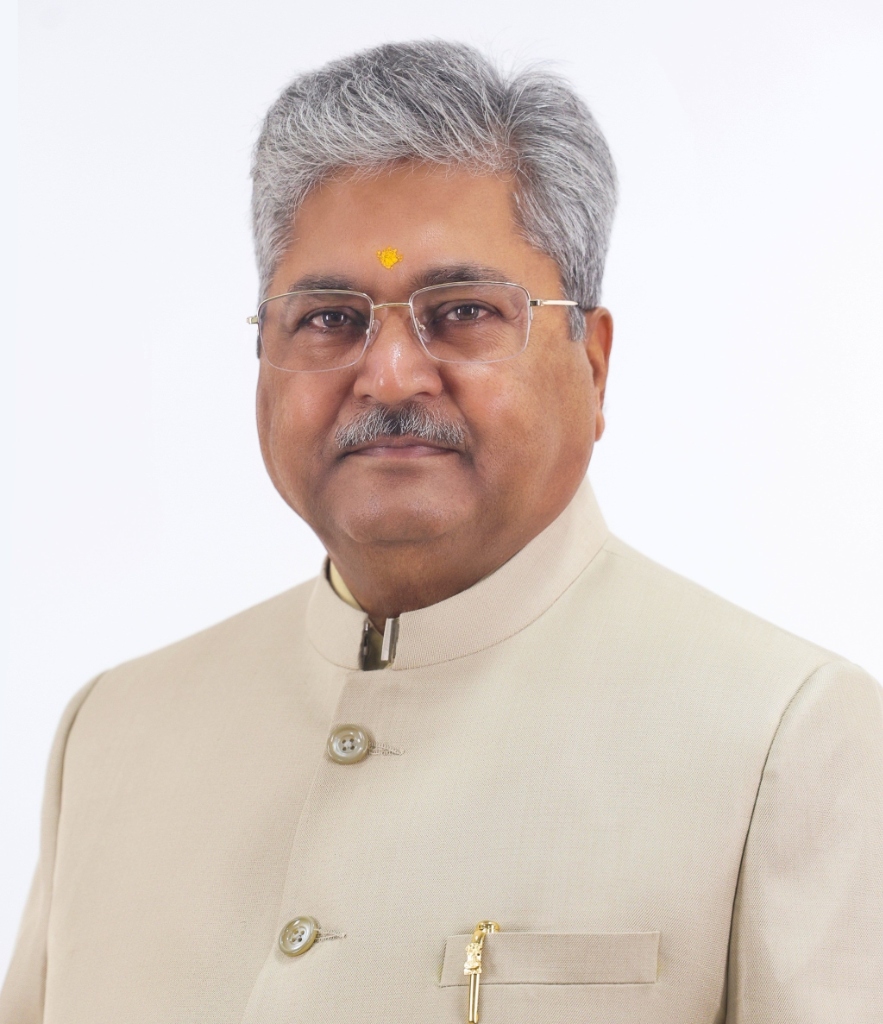
Hon'ble Governor
Shri Dushyant Kumar Gautam
Shaping a Resilient,
Sustainable Sikkim
The Institute for Transforming Sikkim (ITS) is the state's apex multidisciplinary policy think tank, guiding governance, reforming planning processes, and leading the state towards its comprehensive Vision 2047.

Driving Evidence-Based Policy for 2047
Established in July 2025 by the Government of Sikkim, the Institute for Transforming Sikkim (ITS) acts as a central catalyst for state reform. By redefining traditional planning models, we foster cooperative development, green innovation, and digital transformations.
Under the direct leadership of the Honorable Chief Minister, the institute leads active site inspections, designs state policy briefs, and conducts robust monitoring to guarantee that developmental initiatives align with community needs.
Monitoring & Evaluation
Data-driven assessments of major state programs.
Sustainable Green Tech
Introducing ecological innovations across infrastructure.
Foreword & Background
Sikkim, the twenty-second state of the Indian Union and the country's first fully certified organic state, represents a unique confluence of ecological wealth, cultural diversity, and strategic developmental aspirations. Situated within one of the world's recognized biodiversity hotspots, Sikkim's fragile Himalayan ecosystems demand innovative models of governance.
To ensure effective implementation and monitoring of central and state schemes, Hon'ble Chief Minister Shri P. S. Tamang (Golay) established the **Institute for Transforming Sikkim (ITS)** as the state's apex think tank body vide notification No. **09/P&DD dated 07.07.2025**.
With a completely hilly and uneven terrain covering **7,096 sq. km** and a population of **6.1 Lakhs** (2011 census), Sikkim is developing in a highly diversified way across all six districts and 199 Gram Panchayat Units (GPUs). A "one size fits all" approach is replaced by target-specific, localized planning.
Four Focused Mandate Areas
1. Capacity Building & Innovation
Promoting knowledge, modern capabilities, and innovative delivery mechanisms across state departments.
2. Cooperative Networking
Fostering cooperative and competitive coordination between Government and non-Government organizations.
3. Transforming Sikkim
Designing need-based, context-sensitive sustainable policy roadmaps for holistic development.
4. Monitoring & Evaluation
Actively tracking and assessing state policies, project efficacy, and central schemes.
Core Policy Objectives
-
Shared Strategic Vision: Evolve bottom-to-top policies leaving no one behind, acting as the strategic advisory hub.
-
Sectoral Focus: Formulate evidence-based plans for agriculture/horticulture, tourism, science & tech, education, health, and environment.
-
Cooperative Federalism: Structured support to coordinate private, public, and central agencies for "Sunaulo, Samriddha and Samarth Sikkim".
-
Partnerships & Research: Build alliances with national/international think tanks and maintain a state-of-the-art resource center.
-
Green Engineering: Drive ecological protection, green technologies, renewable energy, and eco-friendly waste management.
Constituency Development Committees (CDCs)
A distinctive feature of ITS is the formation of **Constituency Development Committees (CDCs)** in all legislative constituencies** of Sikkim.
By engaging farmers, women, youth, entrepreneurs, and civil society, CDCs formulate grassroots-level constituency development plans, ensuring a powerful bottom-up approach that bridges the gap between policy and practice.
Mid-Course Corrections
ITS actively evaluates Centrally Sponsored Schemes (CSS), Externally Aided Projects (EAPs), and State schemes. Real-time field feedback is utilized to identify implementation gaps and make innovative policy corrections.
Short-Term Goals (0 - 2 Years)
- Project Monitoring: Regular site inspection tours for CSS, State-funded, and international agency (World Bank, IMF, UNDP) projects.
- District-Level Engagement: Participatory planning workshops with District Collectors and line departments.
- Connectivity Proposals: Build modern-lane highways, all-weather rural roads, and transport corridors.
- State Data Observatory: Establish a real-time data observatory and digital dashboard to track socio-economic development metrics.
- Capacity Building: Launch "Policy Labs" focusing on green energy, agri-value chains, and youth employment.
Medium-Term Goals (3 - 5 Years)
- SDG Integration by 2030: Align every department's planning and budgeting with the 17 UN Sustainable Development Goals (SDGs).
- Climate Resilient Infrastructure: Construct environmentally friendly multi-lane highways for high-altitude conditions using green engineering and landslide mitigation safeguards.
- Economic Diversification: Expand startup ecosystems in clean energy, organic agriculture, IT/ITeS, and eco-tourism.
- Public-Private Partnerships: Strengthen collaborations in hydropower, logistics, and agro-processing.
Long-Term Vision (Viksit Sikkim 2047)
- Viksit Sikkim 2047 Master Plan: Establish a comprehensive state development master plan aligned with a sustainable India @ 100 years of independence.
- USD 70+ Billion Economy: Target a state economy exceeding USD 70 billion by 2047, maintaining per-capita GSDP growth well above the national average.
- Wellness Tourism Hub: Position Sikkim as a premier global medical and wellness tourism circuit, merging modern medicine with traditional Ayurveda and all indigenous healing practices.
- 6G Digital Readiness: Implement universal high-speed digital connectivity networks, smart townships, and 6G telecom networks state-wide.
Governing Body Composition
Governed as the state's apex think-tank under Planning & Development Department, Gangtok via **Notification No. 09/P&DD dated 07/07/2025** (issued pursuant to Notification No. 08/P&DD dated 07/06/2025). The Vice-Chairman and Members hold charge for a period of three years.
| Sl. No. | Name | Status / Role |
|---|---|---|
| 1 | Shri Prem Singh Tamang, Hon'ble Chief Minister | Chairman |
| 2 | Shri Chandra Prakash Sharma | Vice-Chairman |
| 3 | Smt. Ganga Devi Pradhan | Member |
| 4 | Ms. Namrata Thapa | Member |
| 5 | Dr. Sangay Dorjee Bhutia | Member |
| 6 | Dr. Bharat Chandra Basistha | Member |
| 7 | Dr. Neeraj Adhikari | Member |
| 8 | Shri James Saring Lepcha | Member |
| 9 | Secretary, Planning and Development Department | Member Secretary |
The Pillars of Transformation
Pro-people
Prioritizing citizen-first initiatives, rural livelihood development, and equitable resource access to ensure policies directly uplift the people of Sikkim.
Feedback DeskInnovation
Fostering modern technology, digital public infrastructure, and creative planning methodologies to reform traditional governance systems.
Feedback DeskInclusive Growth
Securing balanced socioeconomic growth that integrates rural tourism, organic farmers, youth startups, and marginalized communities into the main economy.
Feedback DeskResearch & Data
Developing evidence-based policy briefs and driving strategic planning using robust spatial mapping, field surveys, and statistical analysis.
Feedback DeskMonitoring and Evaluation
Establishing stringent oversight, real-time KPI tracking, and community feedback audits to ensure the successful delivery of state programs.
Feedback DeskSDG Goals
Aligning developmental policies with global Sustainable Development Goals to maintain Sikkim's lead in carbon neutrality and biodiversity.
Feedback DeskParticipative
Empowering citizens, local panchayats, and civic bodies to voice feedback and play an active role in policy formulation.
Feedback DeskCollaborative
Integrating work across central agencies (NITI Aayog), line departments, academic institutions, and international sustainability networks.
Feedback DeskTransparency
Fostering public trust through open data disclosure, active feedback loops, and highly transparent policy recommendations.
Feedback DeskPublications & Policy Reports
Annual Policy Review (2025-2026)
sdad
Sikkim Strategic Vision 2047
The comprehensive policy blueprint detailing Sikkim's development goals, carbon-neutral pathways, and organic farming expansions.
Annual Policy Review (2025-2026)
A detailed evaluation of sector-wise growth metrics, permit digitization milestones, and clean energy grid rollouts.
Cardamom Cold Chain Study
An actionable research paper outlining block-level cold storage setups and logistics corridors to Siliguri.
Press Releases & Media Desk
policy 2
asdasd